
Qussa

Stories from Afar & Up Close

Filtering by Category: Typical---

“I’m not only perfect, I’m Lebanese too!”
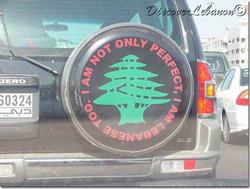
perfect… It's the text on the extra tire and on a bumpersticker I saw in the United States. And it is a philosophy of life. Lebanese people are better at everything: their food is tastier than any other kitchen, they invented the alphabet and are the most highly educated population, the Lebanese women are the most good-looking women in the world, their accent the best-sounding of all Arabic accents, their sea the most beautiful and their snow the most enjoyable.

They are even better at being at war than any other country. During my research last year I came across the funniest phenomenon: people spoke with such pride about their behavior during war that it almost seemed they had wanted it to last a bit longer, just so they could display that fantastic behavior for the whole world to see. They compared themselves to Iraq, and found the Iraqis to be losers. Broken windows? They would fix those things straight after every explosion. People staying away from school or work? They would never let a war stop them from doing what they were supposed to do. And crime? No way, Lebanon was the safest country, nothing ‘illegal’ happened during any of all those wars the country has seen. (That many written sources completely contradicted this image of the absence of chaos during war did nothing to change their utopian views of Lebanon).

And recently, when a huge drugs- and prostitution cartel was rounded up by the French police in Cannes, largely consisting of Lebanese pimps (implicating the son of an important Lebanese politician, I believe), my friends only had one comment: of all the prostitutes that were found, the Lebanese girls had been the most beautiful, the most expensive, the most in demand…

I guess you should take every opportunity you have to boost your confidence if you live in a country as screwed up as this one.

Dat hadden we nou net nodig

We hebben gordijnen nodig, volgens de huisbaas. Dat we nogsteeds geen warm water hebben, dat de kraan in de badkamer lekt aan de achterkant, dat er vocht onder uit de koelkast loopt, dat als het regent de woonkamer blank staat omdat de voordeur net iets te klein is voor de deuropening - dat zijn allemaal details. Het is belangrijker dat er niemand bij ons naar binnen kan kijken. Eerst dacht ik dat het was vanwege de werkers die met de rest van de appartementen bezig zijn - doordat het gebouw een hoek maakt, kunnen zij rechtstreeks bij ons de slaapkamer in kijken, en het zou natuurlijk goed kunnen dat de aanblik van twee jongedames in korte pyjamabroekjes hen in de ogen van de huisbaas iets teveel afleidt. Maar nee. De werkelijke reden dat de gordijnen ineens bovenaan de to do - list stonden, werd duidelijk met het vriendelijke verzoek van de huisbaas om niet, net zoals vorig jaar (toen mijn huisgenote in een appartement een verdieping lager woonde) "constant allerlei jongens op bezoek te hebben". De buren hadden geklaagd. De beloofde gordijnen? Een prachtig staaltje 'verstoppen en net doen alsof je niet weet dat het gebeurt' dus. Maar mij hoor je niet klagen, ik hoop alleen dat het niet van die hier oh-zo-populaire dikke groen-met-gouden drapeersels worden...

War of Water

“You are stealing our water!” It was a women’s voice, and she was screaming at the top of her lungs.“No I am not, you come here all the time and take everyone’s water!” the man yelled back angrily. A third one joined. “They filled it up yesterday! If you don’t steal it, then why are we out of water again now?” She was even louder and angrier than the other two.

I know wars are being fought in the Middle East over water, but I didn’t know they were being fought right outside my bedroom window, on the roof of the neighboring building. Yet here they were, and they kept screaming until the two women decided to take action, bringing their jerrycans to the roof to single-handedly fill their tank.

Water tanks on the roof

Water in Lebanon is an interesting phenomenon. Lebanon is one of the few countries in the region to have ‘rivers’ – and this definition should be taken broadly; a stream of a few meters wide is called a river – going through almost every area of the country. Water, it is jokingly said, is Lebanon’s oil: it’s a blessing and a curse in one (as the neighboring countries will always try to find ways to control the flow to their own benefit). Yet having all these streams running through the country doesn’t mean that one is guaranteed to have running water in the house, in fact, quite the opposite.

Most buildings have gigantic tanks on the roof, ranging in size from a hundred to a thousand liters of water, that provide water for all the apartments. Every few days, a government truck passes by and delivers water at street-level, that is then pumped up to these tanks on the roof. If you are unlucky, you can be out of water for quite a while – the government tank didn’t pass by; or they did but there was no electricity at the time so the pump to get it to the roof didn’t work; or the neighbors have felt the need to water all their plants and have thus used up the ration for the week, leaving the tank empty.

Meanwhile, my roommate and I have a slightly different problem in our new little house on the roof. The government truck did pass by, the electricity was there to pump it up, and the tank is still full of water as the other apartments on this floor are still uninhabited. Yet not a drop of water is coming out of our taps. The landlord can’t seem to find out what the problem is despite our repeated pleas and threats (and apparently plumbers are a rare species these days), but to prevent total social exclusion as a result of a lack of cleanliness, he gave us the keys to an empty apartment on the third floor. Showering, washing hands, doing the dishes, everything is done on the third floor. That’s why we can be seen sneaking down the stairs in our pyjamas in the middle of the night, with a roll of toilet-paper in our hands…

Eid Kariem! - Gelukkig Suikerfeest!

De eerste week van Ramadan was het ergst: honger, dorst, de hele dag aan niets anders kunnen denken dan eten en drinken. In de weken erna wende het langzaam maar zeker, het hongergevoel werd minder, de laveloosheid aan het eind van de middag – vlak voor de iftar – niet meer zo overweldigend. Ik begon de lol van het vasten in te zien: kijken hoe lang je het vol kunt houden zonder nieuwe brandstof voor je lichaam. Het werd me weer eens duidelijk dat de geest veel sterker is dan het lichaam, en ik kan me nu voorstellen dat Ramadan, naast alle TV-shows waarin auto’s en koelkasten weggegeven worden, ook een heel spirituele ervaring kan zijn. De reacties van anderen op mijn vasten waren over het algemeen positief – vooral ouders van vrienden konden het erg waarderen dat ik wilde voelen wat zij elk jaar lang een maand meemaken. Een beetje vreemd vonden ze het vaak ook wel, vooral toen bleek dat ik daadwerkelijk de héle Ramadan bleef volhouden. ‘Samidoun?’ vroegen ze dan als ze me zagen, ‘nogsteeds volhardend?’. Mensen van mijn leeftijd wilden vooral weten of ik me aan álle regels hield – tijdens deze heilige maand is seks hebben uit den boze, maar aangezien Walid op dag één naar Nederland was vertrokken, hoefde ik over een antwoord daarop niet na te denken.

Een groot voordeel voor mij was dat Ramadan ook de maand is van de gezamelijke maaltijden, waarbij uitgebreid gekookt wordt voor zoveel mogelijk mensen. Het feit dat ik alleen woon en aan het vasten was, maakte dat ik zo ongeveer om de avond uitgenodigd was voor een iftar bij een bevriende familie. Wat overbleef van de vegetarische gerechten kreeg ik dan keurig in tupperware mee naar huis, dus te eten had ik altijd – ik heb in de hele maand precies drie keer zelf gekookt.

Ik was niet de enige die in de loop van de maand haar energie hervond. Hamra, de belangrijkste winkelstraat in mijn buurt, was in de eerste week elke avond uitgestorven, maar met het naderen van Eid el Fitr (Suikerfeest) gingen veel kledingwinkels na inftar weer open, en caféetjes en coffeeshops zoals Starbucks bleven hun klanten bedienen tot 4 uur ’s ochtends (vlak voor het mannetje met de trommel door de straten liep om aan te kondigen dat het moment van vasten weer was aangebroken).

En vandaag is het dan eindelijk Eid el Fitr. De meeste mensen hebben vrij; ze zijn in hun nieuwe kleding op weg naar een uitgebreide lunch met de familie, de kinderen rennen door de straten om de laatste restjes vuurwerk af te steken. Ik vier het met een middagmaal van spaghetti en broccoli... eindelijk weer lekker zelf koken.

We would never have just one

I was learning names of fruits and vegetables and I wanted to know the word for 'apricot'. 'Mishmosh', Jamil (who is trying to teach me Arabic) said. Knowing just the slightest bit of Arabic grammar, it sounded like a plural to me, and so I asked again. 'One apricot', I said. He looked at me, puzzled. 'Why would you want to know the word for one apricot? These things are tiny! You would never have just one!' I begged to differ; I am pretty sure I regularly eat just one apricot. To Jamil, this was total insanity: you don't eat one rice, or one lentil, do you? It took me a few minutes to get him to tell me the singular: mishimsheh. When I walked home I stopped at the vegetable-seller to get a zucchini. I picked a nice one, took my wallet out of my purse and looked at the shopkeeper for the price. The man waved with his hand. 'Khalas', he said, 'it's ok.' I motioned that really, I wanted to pay - after all, he has a shop and I am buying my food for dinner. He once again told me no, shook his head and said: 'It's a zucchini. Just one.'