Qussa

Stories from Afar & Up Close

Old, abused... replaced

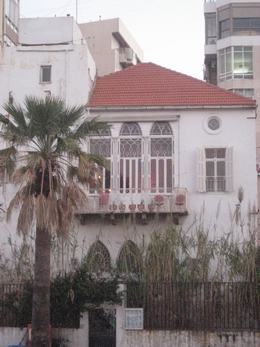
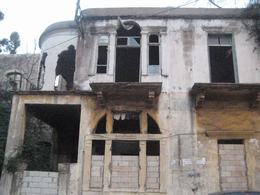
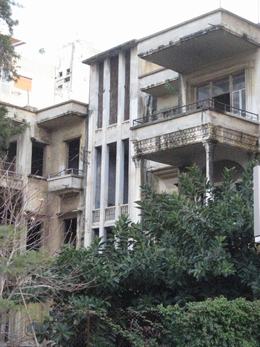
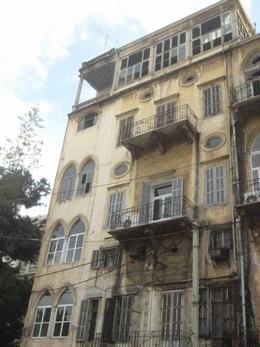
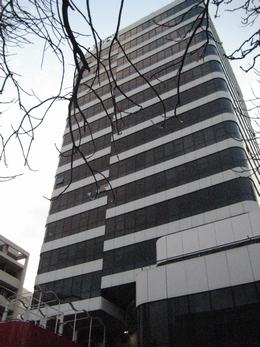
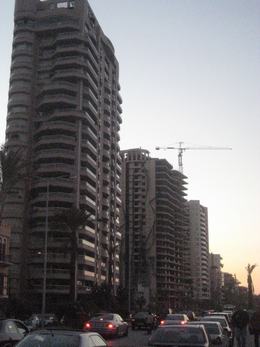
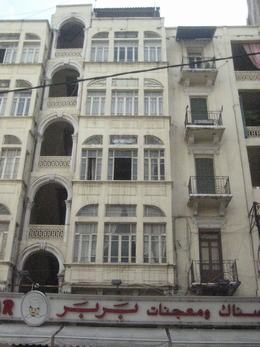
One of my friends who left the country doesn't want to come back because she doesn't recognize Beirut anymore. "The Beirut of my childhood", she says, "is a city full of beautiful buildings, old architecture, low houses with elegant balconies. Now, all I see is ugly high-rises without beauty or soul." Spears Street - above Barbar On the Corniche - one of the last ones

Unfortunately, I don’t know the Beirut of her youth. But sometimes, on a walk around the neighborhood, I catch a glimpse of what it must have been like. It looks beautiful indeed – the stairways outside the house, arched windows, red-tiled roofs, evoking thoughts of times long gone. Damascus and Aleppo (big cities in Syria) are still full of houses like this, with courtyards surrounded by small balconies, a small tiled fountain in the middle. These are the places where the thousand-and-one-night stories still live.

Concorde Wardieh / Jumblatt area Concorde 2 Spears 2

Also unfortunately, these beautiful old Beiruti buildings are not only left to rot and wither away, they are also replaced by towers of glass and cement that leave nothing to the imagination. They mainly just block the view.

Hamra Corniche

See? This way the rich Saudis (and other millionaires from the Gulf who bought these apartments on the Corniche) are the only ones to enjoy the view…

De vrienden van Geert

“Zij komt uit Nederland,” zei de boekhandelaar, en wees naar het boek dat naast de kassa lag. De Engelse versie van Mijn Vrijheid, het boek van Ajaan Hirshi Ali. “Weet ik,” zei ik, “ik ook.” “Jullie hebben daar ook Moslims,” vervolgde de boekhandelaar. “Dus ook problemen.”

Dat was anderhalf jaar geleden.

Dezer dagen is haar boek verplaatst naar de onderste schappen. Nu krijg ik af en toe een vraag over ‘die ene minister van jullie, die een film aan het maken is.’ Denemarken is het land van de cartoons, Nederland het land van de anti-Mohamad-film. De meesten willen vooral weten waarom. “Om te bewijzen dat jullie terroristen zijn”, zeg ik dan maar. “Oh ja,” lachen we dan, “waar is de Nederlandse ambassade eigenlijk?”

ABN-AMRO Tower, 9e Verdieping, Ashrafiyeh, Beiroet; ik hoop dat ze hun rampen-draaiboek klaar hebben liggen. Ga ik vast mijn Belgische paspoort oppoetsen. Of misschien is het slim om voorlopig het gerucht dat ik uit Noorwegen kom niet meer tegen te spreken?

On the road

It’s one of those things I have come to accept as a normal part of daily life: checkpoints. I pass by least 3 of them on my way to work. Some are standard, fixed in one place; others appear and disappear in unexpected places along the road, lasting a few hours or a day. Most are manned by the army or the police, a few by ‘internal security forces’ or, rarely, customs officers. They can be part of the scenery, with warning signs half a kilometer ahead, concrete roadblocks lined up to steer the cars in the right direction, and a little sentry box covered in the colors of the Lebanese flag to shelter the officer on duty from possible rain; they can also be haphazard constructions of crush barriers blocking the road to a point where cars have to slow down to a snail’s pace to slalom around them. The cars are usually directed towards the left side of the road, leaving the right side open for those whose drivers are pulled over. A soldier to the left, machine-gun in one hand, peeking into every car, signaling with the other hand to continue driving or stop for a closer inspection of the car and its passengers. About 20 meters ahead another soldier holding a spiked barrier on wheels, to be thrown in front of the wheels of those ignoring the orders of the inspecting officer; on the right a few uniformed men walking around, checking car-papers, driver’s licenses, passports, identity cards, trunks and car-hoods.

When passing a checkpoint, the driver is supposed to come to a near halt (without actually stopping), with the window on the driver’s side rolled down and the volume of the radio at its lowest. If motioned to drive on, a ‘thank you’ is in order. Having a majority of female and/or blond passengers usually warrants unhindered passage, but cars full of young men almost always get directed to the side, and so are delivery vans and pick-up trucks.

I am still trying to find out what they are searching for. Clearly, these checkpoints are intended to make the country more secure, but how exactly they contribute to the overall safety – I don’t know. Do they want to intercept smuggled weapons? Stop boys from joining their friends in a fight? It seems that only men and immigrant workers (Ethiopian, Sri Lankan and Filipino women) pose a threat to society, because they are the ones who have to show their identity papers at the rare occasions that the (mini)bus gets pulled over. And apparently I am the least dangerous of all, because even when all the other females on the bus were asked to show identification, the soldier looked at me once and ignored the passport I tried to hand him.

Lebanon wouldn’t be Lebanon if the Lebanese wouldn’t know their way out of the hassle. With a car full of cameras and other equipment, we were sure of a spot in the inspection line, yet when our driver opened his window and the soldier said ‘good morning, where are you going with that?’ it took us only 7 words to make him grin from ear to ear, nod his head in agreement and let us pass. What we asked? ‘Sorry sir, are you from the Bekaa-valley?’ Yes, he was, and coincidentally from the village next to that of the driver.

Another strategy, to be used in case of forgotten IDs, is ‘ask before they ask’: when you get to the checkpoint, you ask the soldier about the road ahead, and (hopefully) he will get so caught up in explaining it to you that he will completely forget to ask for your papers. This does not always work, however, as we realized when we got lost in the hills of South Lebanon and asked to soldier about the way to Tyr last summer. ‘Of course we know the way,’ he said, throwing a look inside the car, ‘but first we would like to get to know the boys a bit better.’

Marriage proposal (type 4)

He was moving a small stick from left to right in his mouth, his head shaven and his army-uniform adorned with a little cedar on the shoulder. He was sitting in front of me on the cheap bus that takes the long coastal road instead of the highway. There was plenty of time to talk. Initially, he only glanced over his shoulder every once in a while, with a smile so big it seemed as if he was unaware that his gums were black and some of his teeth were missing. Then he asked me where I was going. ‘Home. Beirut.’ His accent was heavy, full of OOOs, I thought he must be from the North. What I was doing here? And was I married? My answer was the usual lie: ‘Yes, I am. Yes, he’s from the South’. He no longer smiled, that was a piece of information he didn’t like: his family came from Akkar, up North as I had guessed, and I should have picked a husband from his region.

I returned the question. No, he wasn’t married yet, but his beautiful apartment in Tripoli was almost finished, and then he would find himself a wife. A high-ranking officer like him – he kept pointing at the little sign of the cedar, it seemed to mean a lot – would have no trouble getting married. His bright smile suddenly returned to his face. ‘I would like to marry someone as pretty as you… don’t you have a younger sister?!?

Sorry, sis, but I told him I don’t.