Qussa

Stories from Afar & Up Close

Have you heard the plane?

Today, I was reminded of this story: It was the summer of 2001 in Kampala, the capital of Uganda. Yoweri Museveni had just been re-elected president of the republic, for the 4th time, and I was lucky enough to be present for the inaugural festivities. On an old airstrip, a rectangular empty space somewhere in the city, a stage was set up for the dignitaries: many leaders of African states, European ambassadors, several princes from Zimbabwe – even Muammar al Qadhafi came to present his well-wishes. On the rest of the field the ordinary Ugandans had gathered to watch the show, and I had joined them. I might very well have been the only white person among them. First there were speeches. Then more speeches. From where I was on the field, the stage was hardly visible, and most people were busier eating, drinking, making music and dancing than they were listening to the VIPs blabbering on stage. They had come for one thing, and one thing only: the air-show. It had been announced that the Ugandan air force would give acte de présence with the fastest machines of their fleet. And indeed, when the speeches were finally done and the formalities concluded, the sky began to rumble.

First there was one jet. Then another. They flew in opposite directions, leaving streaks of white clouds against the blue sky. They turned, quickly, roaring and thundering low over the people’s heads… An old man next to me was staring with his mouth opened wide. After a grand total of 6 rounds over the audience, the planes took off. The old man turned, took my hand and shook it wildly. With a look of pride in his eyes he said: 'now THAT’S technology!'

--

This Saturday, November 22nd, it is Independence Day in Lebanon. This means that Downtown is already partly blocked off in order to clean it of bombs because many politicians eligible for explosion will be gathered there for the military parade. It also means that the entire air fleet of the Lebanese military has been flying over Beirut the past few days: all 14 helicopters (8 big ones, 6 small ones) and no less than two Hawker Hunters.

Those Hawker Hunters are no joke. They were produced in the 1950s and purchased by the Lebanese president in 1958, only to be used a few times before rusting away or being sold to a museum. However, it seems that two of them have had a thorough check up and will be performing on Independence Day, for which they are currently practicing. The noise is unmistakable, rumbling like a coughing old man. My friends keep asking ‘have you heard the plane?’, proud like the old man in Uganda, because normally we hear nothing but the thundering noise of Israeli jets – usually the only jets in the Lebanese airspace. However, they often follow the question with ‘I hope it won’t try to break the sound-barrier, because it will probably break down into a thousand pieces if it does’. Apparently they don’t quite share the old man’s faith in technology. Either way, I wish everyone a happy Independence Day!
Archaic?

My friend visiting me from the Netherlands and I were sitting in the back of the minivan going around Beirut. It was dark and raining outside, and we were the only ones left on the bus – we were getting close to the final destination. The van stopped to pick up another passenger. It was a young woman opening the sliding door, folding her umbrella and taking a seat on the first bench. The bus continued its way, the door still open. She’s not closing the door! my friend whispered to me. No of course not, I replied no longer surprised at the scene in front of us, women here don’t close the door. They wait for the men to do that. As we were the only other passengers on the van, there were clearly no men to close the door for her. So who’s going to close the door now? my friend asked, while the girl turned to close the small window next to her, still looking where those annoying gusts of wind and rain came from. No one, it will eventually close when we go downhill and the bus hits the brakes, I said. The door indeed remained open until a few minutes later we stopped at a crossroad.

It is something I can’t get used to, this weak attitude of many Lebanese women, and my Dutch friend’s astonished reaction was a nice reassurance that I am not alone in my disdain for the dependency it displays. Why would any girl need to pass the water bottle to her male friend to open it, when she has proven she can easily do so herself when he is not around? Why does he need to carry her bags, when she is the one who wants to take the stuff with her? I simply don’t understand what’s nice about seeing other people carrying my groceries to the car, or having to stand aside while some men are struggling to load my cupboard onto a truck – clearly in need of an extra hand, but unable to accept help from a woman.

Sietske seems surprised that the bank offers her a credit card and then requires her to bring her husband to sign with her. I say: in a country where women refuse to open or close their own doors, it only makes sense that they are not allowed to open or close their own accounts either.

Why, really?

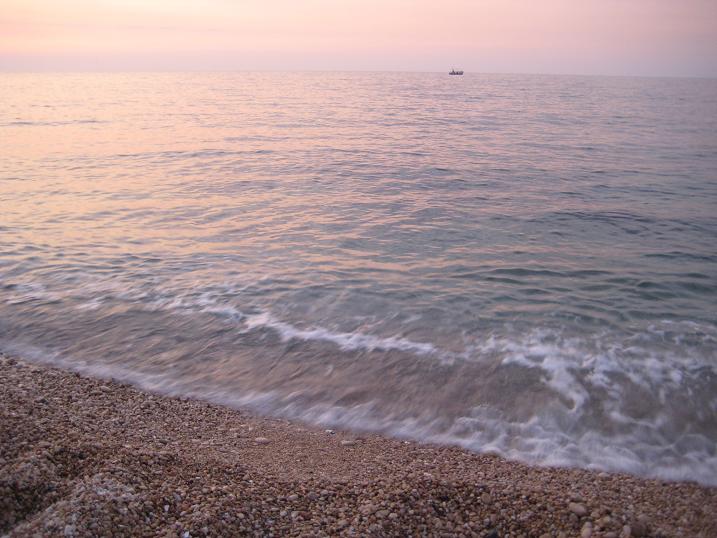
Sunset in Jbeil

.

.

.

.

.

.

.

.

.

.

.

.

.

.

.

So why do you like living in Lebanon? My friend, visiting from the Netherlands, asked me after a day of being harassed on the Corniche and having been overcharged with every single purchase just because we are both foreign.

I couldn’t quite think of anything, just then.

But two days later I knew full well why I like living in Lebanon. Because I can sit on the beach on a Monday night, enjoying the colors of the sunset and throwing pebbles in the water, I said.

In November! she added.

In November, indeed. It’s easy to forget one cannot wear flip-flops this time of year everywhere in the world...

Liefde gaat door de maag

Het moge inmiddels duidelijk geworden zijn dat eten een belangrijke rol inneemt in de Libanese samenleving. Familiebanden worden onderhouden met de uitwisseling van locale specialiteiten, gastvrijheid wordt uitgedrukt in een stroom van hapjes, drankjes en maaltijden, en er worden zelfs rechtszaken aangespannen om bepaalde gerechten voor het land te behouden. Het was dan ook tijdens een familie-barbecue dat ik officieel aan Walid’s grootouders voorgesteld werd. Het was niet de eerste keer dat ik ze zag. In de zomer van 2007 was ik ook al eens uitgenodigd voor een uitgebreide familiemaaltijd, maar toen was ik nog geintroduceerd als ‘een vriendin uit Nederland’, en niets serieuzers dan dat. Het leek de familie beter om de grootouders niet teveel van streek te brengen – een buitenlandse vriendin voor hun kleinzoon, daar zouden ze niet heel blij van worden. Dat had niets met mij te maken, maar alles met hun oudste zoon: die was 30 jaar geleden met een Française getrouwd, en woont sindsdien in Frankrijk met drie kinderen die geen woord Arabisch spreken. Dat zou de grootouders niet nog eens overkomen.

Opa dacht dat ik een mede-student was van Walid, en sprak mij vriendelijk toe in het Frans, almaar proberend mij als vegetariër een lekker stukje vlees van de barbecue aan te bieden. Maar oma had mij wel door. Ze riep Walid bij zich en waarschuwde hem zich niet aan mij te verliezen, want voor hij het wist zou ik hem meeslepen naar Nederland en zouden zij hem nooit meer zien! Uit veiligheidsoverwegingen werd ik daarna alleen nog meegenomen naar familie-aangelegenheden waarbij de grootouders niet aanwezig waren.

Dat duurde zo een jaar of wat. Een jaar waarin de moeder van Walid (die gelukkig geen problemen heeft met de buitenlands-heid van haar zoon’s aanstaande) hard aan het werk ging om haar ouders voor te bereiden op het onontkoombare: hun kleinzoon aan de hand van een lange blonde Nederlandse. Ze prees mijn beheersing van de Arabische taal, mijn werk met een NGO in het gebied waar de grootouders wonen, en verhaalde zelfs van mijn Hezbollah-diploma om aan te geven dat ik toch echt aan hun kant van het politieke spectrum sta.

Haar moeite werd beloond, ware het niet van harte. Toen Walid een paar weken geleden bij zijn grootouders langsging, werd hij bij zijn opa op de bank geroepen. Hoe zit dat nou met die lange? vroeg opa, ben je daar nogsteeds van overtuigd? Walid keek eens om zich heen, zag zijn moeder en tante knikken dat het moment daar was, en brak het nieuws: ja, opa, we zijn verloofd.

Vandaar dus de barbecue; geen beter moment om mij officieel de familie in te schuiven. Maar omdat de grootouders nogsteeds niet helemaal beseften wat dat nou inhoudt, vegetariër zijn, had de moeder van Walid speciaal roosterbare groenten voor mij meegenomen. Ik werd in een stoel naast grootvader gemanoevreerd, alwaar ik in mijn beste Arabisch een gesprek probeerde te voeren over hoe hun huis en de stad er vroeger uitzagen. Toen opa mij alle planten in de tuin aanwees, zag ik aan de glimlachende gezichten van ooms en tantes dat het de goede kant op ging, en uit de brede glimlach bij oma’s kom nog eens langs, met Walid! bij vertrek bleek het een uitgemaakte zaak: ik was goedgekeurd.

Maar de ware bezegeling van de acceptatie kwam twee weken later. Onderweg naar een picknick bij oom en tante gingen we even langs bij de grootouders. Welkom welkom! We hoorden al dat jullie zouden gaan picknicken. Opa kwam naast me staan, greep mijn hand en zei: maar we weten niet zeker of ze wel goed aan je gedacht hebben, dus oma heeft wat voor je gekookt. Oma hield glimlachend een schaal omhoog. Mjaddara, linzenpuree – zonder vlees! Ware liefde gaat door de maag, ook die van de grootouders.

The Great Competition

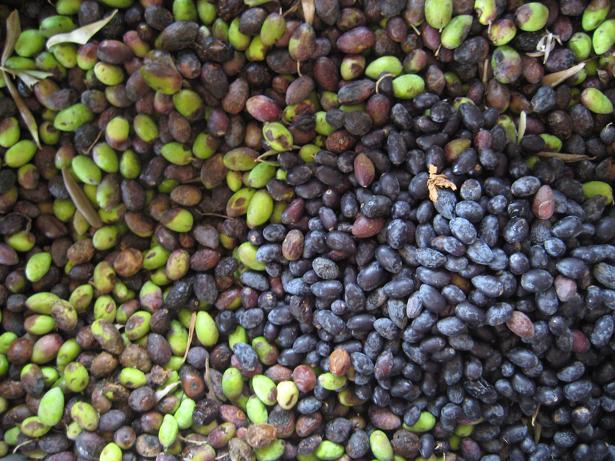
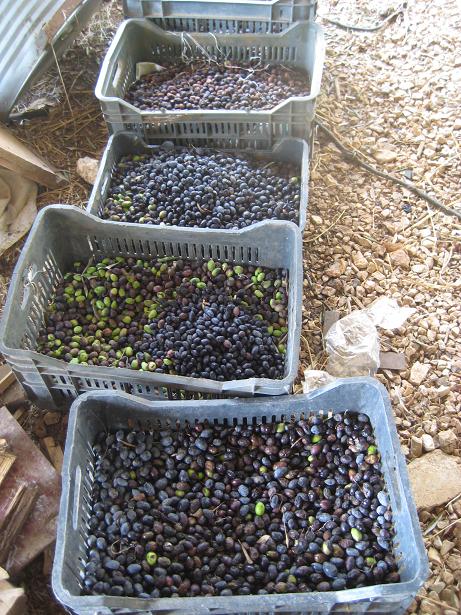
Olive harvest “It’s the oil, stupid!”No, I am not talking about the USA and their wars here in the Middle East. Nor am I talking about their nerve-wrecking elections. (I mean, I don’t even know if I will dare to go to sleep tomorrow, for fear of what we might wake up to on Wednesday! Which reminds me of the election-results in 2004, which I accidentally witnessed with the Democratic crowd in an upscale club in New York City. I remember the speech of Barack Obama, broadcasted on the big screen, and someone whispering in my ear ‘watch closely, that there is our next president!’ – I didn’t dare to believe him then, and I can only hope to believe him now.) But that’s not what this post is about. I am talking about olive oil.

Olive oil might very well be as important for countries around the Mediterranean and inwards toward Iran as black oil is for the Gulf States. Back in the Netherlands, I used to work in a Persian restaurant, and the sweet chef would start every recipe with ‘oil olive, lots of oil olive!’ before adding any other ingredient. (This same sweet chef had learned to cook when his political intellectual activities had landed him in prison for a few years. Once his request for asylum in the Netherlands was approved, he set out to find a job, and the overly-helpful placement center thought a kitchen restaurant would be the most appropriate considering his skills. Glad we made use of his intellectual abilities, right? But I digress again.)

So, olive oil. In two years in Lebanon, I have only had to buy a bottle of oil once, and not after all my friends apologized that the harvest had been so meager that year that even they had to get it from the stores. Every other time one of my friends would discover a nearly empty olive oil bottle in my kitchen, he or she would immediately exclaim ‘your next bottle will be from our oil! You have to taste it, it’s the best!’

Harvest close up I have been offered spoons of olive oil when coming to people’s houses for a cup of tea, ‘just to taste’. I have been laughed at when suggesting that someone (usually on their way back to job or studies in Europe or the USA) could lighten their luggage by removing those two-liter bottles of uncle’s olive oil from their suitcases. Good olive oil is a source of pride, and an almost essential part of someone’s identity – even if they had no hand in growth, harvest or preparation of the olives and the oil.

Now that I am living with Walid, I have automatically become part of the sharing of olive oil of his family, much to the chagrin of many friends who have proudly supplied me with olive oil before. Walid’s mother’s family has some olive-groves in the South, and for her and her brothers and sisters there is no question as to which oil will be used in their households – their husbands and wives have no say in the matter. But the pride never really goes away, and when one uncle-in-law had a chance, he offered me olive oil from his family’s village. ‘You know,’ he said with a wink, ‘they may think their olive oil is the best, but we are not from their village, we can eat much better!’

I’m looking forward to the competition. May the best man - uh, oil win.

Don’t forget to check Qussa: The Visuals every once in a while!