
Qussa

Stories from Afar & Up Close

Mannetjes (het busstation in Syrië)
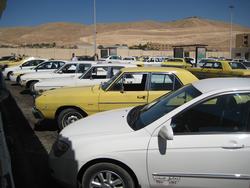
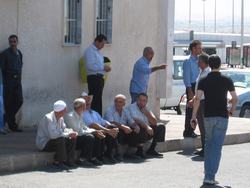
Busstation in DamascusMannetjes op het busstation Het Midden Oosten is niet echt een populaire vakantiebestemming dit jaar. Dubai mag dan hot zijn, verder is het meer angstaanjagend dan exotisch met oorlog in Irak, boze aanvalspraat richting Iran, bomaanslagen in Pakistan, bezetting en verzet in Palestina/Israel en dreiging van burgeroorlog (of civil strife – ‘burgerlijke onrust’ zoals ze het hier optimistisch noemen) in Libanon. Op de dappersten (of domsten) na, zijn er dus maar weinig toeristen te bekennen.

Zo ook in Syrië. In het land zelf gebeurt misschien niet zoveel*, maar een reputatie als epicenter van de ‘As van het Kwaad’ is bepaald niet bevorderlijk voor de reizigersstroom. Vandaar dat ik me vanmorgen twee uur lang op het busstation van Damascus moest vermaken tot de taxichauffeur de vereiste 4 medepassagiers had gevonden en we naar Beirut konden racen. Gelukkig is er op een busstation in Syrië altijd wel wat te beleven.

Elke auto die het terrein van de wachtende taxis oprijdt wordt belaagd door zeker 10 hoopvolle taxichauffeurs. ‘Amman?’ ‘Beirut?’ ‘Saida?’ ‘Shtoura?’ Als de beduusde passagier zijn of haar bestemming heeft genoemd, begint het grote gevecht om de bagage. Hoewel er een semi-officiële volgorde is waarin de auto’s opvullen en vertrekken, zijn er toch altijd slimmerds die er met de bagage vandoor gaan en op die manier de passagier proberen te dwingen met hun auto mee te rijden. De chauffeur die als eerste aan de beurt is pikt dat natuurlijk niet, rent erachter aan, ontfutselt de passagier’s reisdocument en krijgt derhalve zijn rechtmatige reiziger onder zijn hoede. De hele meute rondhangende mannen die op het opstootje afkomen als vliegen op stroop voorzien de weerloze reiziger luidruchtig van advies en maken zo de chaos compleet.

Er zijn maar weinig vrouwen op het busstation. Er zijn taxichauffeurs, politieagenten, mannetjes die tafelkleedjes en tweedehands schoenen verkopen, mannetjes die de volgorde van de wachtende wagens in de gaten houden (meestal met een stok in de hand om opstandige chauffeurs op de vingers te tikken), overheidsbeambten die de uitrij-belasting registreren en innen, en mannetjes die niks anders te doen hebben dan overal commentaar op leveren. Erg zachtzinnig gaat het er niet aan toe – een vriendschappelijke schouderklop gaat niet zelden over in een schreeuwpartij die soms tot luid gelach, en soms tot rake klappen leidt.

Als de zaken slecht gaan betekent dat weliswaar lange wachttijden op het station, maar de wanhoop van de chauffeur maakt ook dat hij graag je verzoek inwilligt als dat hem een extra passagier oplevert. Zo kwam het dat de vader van mijn mede-reizigster zijn dochter alleen met ons mee wilde stuurde als ze tussen de twee andere dames op de achterbank zou komen te zitten. Nu is het hier gebruikelijk dat de mannelijke passagiers (met z’n tweeën!) op de voorstoel zitten en de vrouwelijke op de achterbank, maar als de mannen in kwestie ieder zo’n 90 kilo lijken te wegen, wordt er wat geschoven in de bezetting zodat de chauffeur in elk geval ruimte heeft zijn stuur te draaien. Niet in dit geval. De vader bleef naast de auto staan tot hij zeker wist dat zijn dochter veilig midden op de achterbank zat. En zo kwam het dat wij alle ruimte hadden, en de mannen voorin met hun zweterige armen strak tegen elkaar aan zaten te schurken.
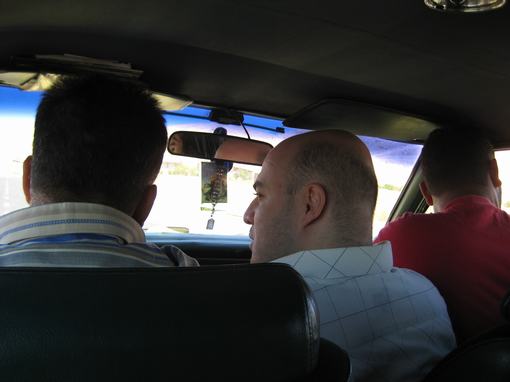
Mannetjes in de taxi

*(behalve een Israelische aanval op een ‘nucleaire installatie’, naar verluid gebouwd met hulp van Noord Korea, in het noordoosten van het land.)
On a Su-Shi Diet

“You are fasting? Ah, for the day. No? For the whole month? Why would you do that? Next thing we know we will see you wearing a veil!” Yes, I am fasting during the whole month of Ramadan. No, I am not becoming Muslim. I am merely practicing what Anthropologists like to call participant observation. You do what the people around you do, to experience what they experience and thus, hopefully, come to a better understanding of why people think what they think and do what they do. As many people around me are fasting, I decided to join them and not eat and drink from sunrise to sunset for one whole month (in Lebanon, this is from around 4.45am until 7pm – apparently, in The Netherlands sunset isn’t until 8.30pm… pfff!).

The first day was a big shock. I had decided to wake up at 4.30am to drink enough water for the whole day. Big mistake: as I laid back down, my belly was playing storm-on-sea and there was no way I would sleep again. At noon, my brain started to fade, and at 6pm I had trouble looking straight. Dinner, at my beloved’s parents’ place, was a relief. The opening bite was the traditional date followed by a sweet drink, and then the equally traditional lentil-soup and fattoush (a Lebanese salad) which went down faster than a fish down a waterfall. Glasses and glasses of water to quench the thirst, regretted half an hour later as I sat on the couch to digest, feeling I was about to explode.

Fasting has become less hard over the days. The hour at which the fatigue sets in gradually moves to later in the afternoon, and I occasionally manage to think about something else than food or drinking. The good part are the iftars – the dinner to break the fast after sunset. Here goes: the more the merrier, and eating alone during Ramadan is not done, so I am, like last year, invited to many a home-cooked meal. But I don’t mind eating my iftar alone. There is a certain magic to preparing the meal without so much as licking my fingers to taste what I am cooking, setting the table on the balcony, and then, with so many people on the balconies around me, waiting for the mosque to start singing; the sign that dinner can be consumed. The only problem is which mosque to follow: Sunnis start eating when the mosque is done singing, but Shia generally wait another 20 minutes or so, just to be sure that the sun has gone down completely.

On the balconies across the street I see two families – one on the 5th, one on the 2nd floor. The grandfather on the 5th floor usually sits down at the table long before sunset, and he is joined quickly by his family members as the call to prayer ends. Silence, interspersed by the clicking knifes and forks on the plates, ensues. I am guessing they are Sunni. It takes another quarter of an hour for the grandmother to emerge on the 2nd floor, with a big bowl of soup in her hands. Their dedication to fast until the last moment implies they are Shia. Me? I have started eating somewhere in between the two. I am on a Su-Shi diet.

I could call this 'boom'

Yesterday yet another politician was blown up. He was the 7th political figure to lose his life by force in Lebanon in the past 2½ years

14 Feb 2005: Rafiq el-Hariri 2 June 2005: Samir Kassir 21 June 2005: George Hawi 12 Dec 2005: Gibran Tueni 21 Nov 2006: Pierre Gemayel 13 June 2007: Walid Eido 19 Sept 2007: Antoine Ghanem

and he might very well not be the last one.

Despite the frequent occurrence of assassinations, people are shocked, angered and scared after each bomb. For a while, streets are emptier, TVs louder, parents tell their kids not to go out, and emotions run high. Once the usual string of speeches (Saad el Hariri making a sad face, asking why so much blood has to be spilled; Walid Jumblatt pledging ‘not to succumb to the threat’; Syria condemning the attack despite being the first and only one to be blamed) is over, it is time to resume life – to smoke an arguileh on a terrace or take the books and sit down in a coffee shop to study. But nobody forgets, and tenser times are ahead.

What's in it for him?

Randa, Hadi and I are sitting outside on the terrace of Costa, a coffee shop at the beginning of Hamra-street. It’s Saturday night, 11 o’clock, and the dark street is lit up green and pink with the Ramadan- decoration. A boy walks by, stops at our table – he wants to sell us a packet of chewing gum. Hadi shakes his head, then notices the bottle of water in the boys hand.

“Do you sell water?” He asks. The boy raises his eyebrows in a manner that means ‘no’ in Lebanon. It’s the bottle he himself is drinking from. “Can you get me a bottle?” Hadi asks. The boy grins and nods with his head towards the bright-lit inside of the coffeeshop. “They sell water, don’t they?” “Yes,” says Hadi, “but it’s 1500 Lebanese liras, very expensive.”

The boys motions us to wait and walks off. First it seems he is just continuing his chewing-gum sales, approaching everyone on the terrace and the sidewalk. Then he disappears and a few minutes later he returns with a bottle of water from Kebab-ji, a fast food place across the street. Hadi gives him 5000 liras, tells him to keep the change and asks the boy where he is from.

The boy’s face turns into a big smile. “The South,” he says, “but I live in Ouzai” (Ouzai is the part of Dahyeh, the largely Shi’a inhabited suburbs of Beirut, closest to the sea). “I come to Hamra every night by shared taxi to sell gum.” “How old are you?” “13” “Shouldn’t you be in school? It’s very important to study.” Hadi tells him. “I am going to school. But at night I sell gum. It’s better than begging. I study hard, but I also pray a lot, because nothing is more important than God, not school, and not politics.” The boy replies. “I agree praying is very important,” Hadi insists, “but God would find it even more important that you study hard. Where are your parents?” “My mother is dead, my father is in the South. I live with my grandparents.” “Ok” Hadi says “well, make sure you study hard and get a good life.”

As the boy turns away, he adds with a certain painful pride: “Within five years, this boy will be throwing rockets over the border.”